

Your hand and wrist consist of a complex set of bones, joints, tendons, nerves, and muscles that work perfectly to bring seamless coordination to fine motor movements. Generally, wrist and hand arthritis becomes more common as we age and can be painful and debilitating. A cortisone shot or injection in the hand for arthritis is an option in complex cases.
Anatomy of the wrist and hand
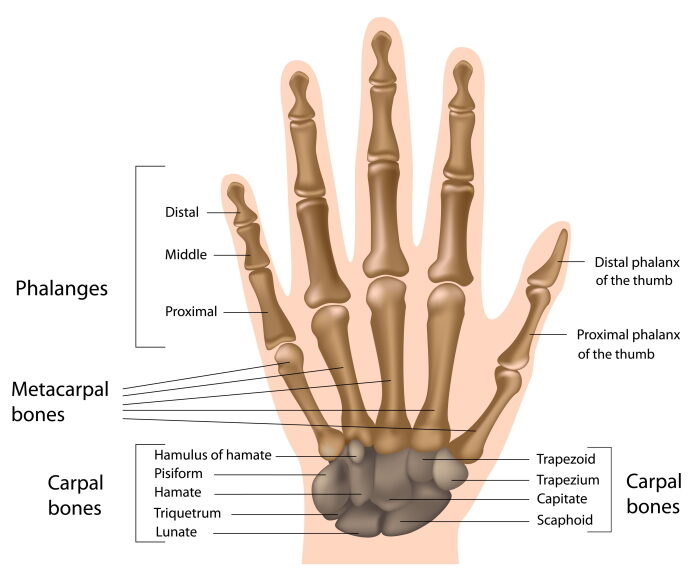
All in all, there are 27 bones in the wrist and hand. The bones are made up of carpals, metacarpals, and phalanges. All these joints are covered by cartilage, which allows for frictionless and pain-free movements. However, in arthritis, cartilage is lost, leading to bone-on-bone movement; consequently, pain results from the movement of these joints without the protection of cartilage.
Symptoms of wrist and hand arthritis
Initially, the first symptom is pain after excessive use, such as a whole day of gardening or playing tennis. As arthritis progresses, simple activities like opening a door or typing on a keyboard can become increasingly painful. Morning stiffness is also a common feature. General symptoms include swelling, restricted movement, warmth, and the presence of cysts or nodules on the finger. These nodules have unique names in osteoarthritis, known as Bouchard’s and Heberden’s nodes.
It is essential to distinguish osteoarthritis from less common inflammatory arthritis, such as rheumatoid disease. For example, some common rheumatoid changes include arthritis and swelling of the metacarpophalangeal (MCP) joints, drifting of the fingers away from the thumb, and nail changes.
How do we diagnose wrist and hand arthritis?
In general, we perform three types of tests:
- Clinical assessment: Examining and palpating the hand and wrist joints can provide clues to the diagnosis.
- X-rays of the wrist and hand provide information about the type of arthritis. Sometimes, ultrasound or MRI can give extra information.
- Blood tests are often crucial if inflammatory arthritis is suspected
Treatment options include a cortisone shot in hand
The goal of treatment is to reduce pain and improve function. Some of the treatment options include:
- Lifestyle modifications: Making simple adjustments to your daily activities can significantly reduce pain.
- Wrist and finger splints: Splinting can provide support, allowing you to perform simple activities without pain.
- Hand therapy: Consulting a therapist for guidance on exercises is essential. You can purchase affordable yet effective hand devices that help keep the joints mobile and enhance strength in the fingers and wrist.
- Medication: A topical cream is frequently applied to the sore wrist or finger joints to provide excellent pain relief. Creams include ibuprofen or Flexiseq.
- Injection therapy: A cortisone shot in hand can help reduce pain and improve mobility for a few months.
- Surgery, such as wrist or finger fusion, is often the last resort.
More about a cortisone shot in hand for arthritis
Cortisone is a potent anti-inflammatory and reduces pain associated with arthritis. However, it is essential to be aware of the potential risks associated with cortisone injections. Indeed, it is not an option for everyone with arthritis.
Generally, we advise cortisone injections under ultrasound to improve accuracy and reduce side effects such as skin thinning and tendon damage. See the image below, which illustrates how ultrasound can accurately direct the needle into a wrist joint.

These blogs outline the potential side effects, time to work, and other issues associated with cortisone injections.
Apart from a cortisone shot in hand for arthritis, are there other injection options?
Yes, but the evidence for the effectiveness of these options on the wrist and hand is limited.
Hyaluronic acid is a naturally occurring substance in bones and joints. Injection of hyaluronic acid into the joint can help alleviate pain. Additionally, we believe it may serve as a lubricant to reduce pain.
We obtain Platelet-rich plasma (PRP) from whole blood. First, the blood is spun, allowing the cells to be separated from the plasma. We then isolate the plasma from the cells and inject it into the joints. While there is good evidence for its use in knee arthritis, there is limited evidence for its use in wrist and hand arthritis. Nevertheless, some doctors are using PRP in the hand when people want to avoid surgery.
Final word from Sportdoctorlondon about a cortisone shot in hand for arthritis
Overall, wrist and hand arthritis is expected as we age. We use a combination of hand therapy, topical anti-inflammatory treatment, and a cortisone injection. Generally, we recommend using ultrasound-guided injections to enhance effectiveness and minimise side effects. Ensure that the practitioner performing your injection has a medical degree and experience with ultrasound.
My fingers become claw like lacking flexibility
And my nails don’t grow making difficult to
Pick up things I drop things a lot. Will cortisone
Shots help ?
it depends on the cause. I’d suggest you see an experienced doctor to assess and treat.