
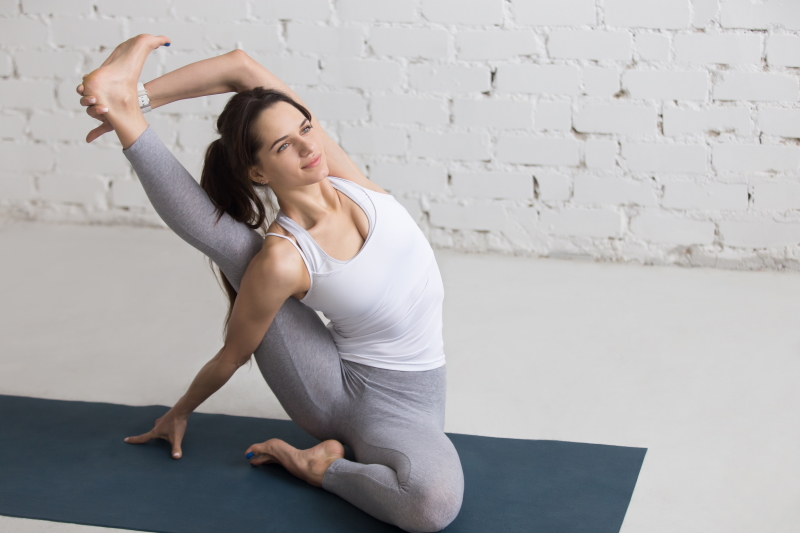
Yoga combines breathing, meditation, and strengthening movement, and studies suggest it benefits stress, mood, and arthritis pain. But while yoga improves strength and flexibility, it can also cause injury. One common yoga injury is buttock pain — known as a “yoga butt” or a yoga hip injury. So what is it, and how do you fix it?
What is a yoga butt injury?

In medical terms, a yoga butt injury is proximal hamstring tendonitis, or high hamstring tendinopathy — overload and swelling of the hamstring tendon where it attaches to the sitting bone, causing pain with movement or stretching. Buttock pain can also result from tightness of the piriformis muscle, a condition known as piriformis syndrome.
Yoga practitioners usually report pain in the buttock crease, aggravated by poses that stretch the hamstring — the compass stretch, forward fold, or downward dog with the knees extended. The pain occasionally travels to the mid or lower thigh, but rarely below the knee.
What causes a yoga butt or hip injury?
The most common cause is relying on the hamstring tendon rather than other muscles during certain poses. Forward folds that bend at the hips without equal movement through the spine overload the hamstring tendon. Repetitive hip movements in flowing styles such as Vinyasa and Bikram yoga add to the risk. And stretching the hamstrings without also strengthening them and the glutes leaves the tendon more vulnerable.
How to fix a yoga butt injury

First, see an experienced sports doctor to confirm the diagnosis and rule out other causes of buttock pain. An MRI scan is often needed to confirm tendon swelling. Once confirmed, treatment focuses on modifying your yoga practice and strengthening the hamstrings and pelvic muscles.
Modifying your yoga poses
The most important step is reducing the load on the tendon.
- Rest from intense yoga. Step back from power yoga and favour restorative yoga while symptoms settle.
- Avoid the highest-tension poses on return, such as forward lotus and the compass stretch.
- Modify the stretch. Do a downward dog with slightly bent knees, sending the hips to the sky rather than dropping the heels to the floor. Perform standing forward folds without full hip flexion, keeping the knees slightly bent.
These changes let you keep practising while taking strain off the irritated tendon.
Strengthening exercises
Alongside modifying poses, strengthen the hamstrings and glutes. Useful options include hamstring bridges (progressing from double-leg to single-leg), weighted walking lunges, and holding lotus pose for control; for the glutes, single-leg squats and banded side-walking clams. The principles of strengthening for hamstring origin tendonitis explain how to progress these safely.
Other treatments for stubborn cases
Ice and a short course of anti-inflammatories such as ibuprofen help in flare-ups. For chronic cases, we consider shockwave therapy or tendon injections — though, as injections are invasive, we try non-invasive options first. Dr Masci explains the full approach to treating hamstring tendonitis, including options for complex cases.
Frequently asked questions about a yoga butt injury
What is a yoga butt injury?
It’s the everyday name for proximal hamstring tendinopathy — overload of the hamstring tendon at the sitting bone, felt as pain in the buttock crease and aggravated by deep hamstring stretches in yoga.
How long does a yoga butt injury take to heal?
Like most tendon problems, it’s often slow, typically several weeks to a few months, with pose modification and a progressive strengthening programme. Reducing the aggravating stretches early speeds recovery; pushing back into deep stretches too soon tends to prolong it.
Can I still do yoga with a yoga butt injury?
Usually, yes, with modification. Switch from power to restorative yoga, avoid deep hamstring-stretch poses (compass, forward lotus, straight-leg forward folds), and bend the knees in poses like downward dog. The goal is to keep practising while offloading the tendon, not to stop entirely.
Which yoga poses should I avoid with a yoga butt?
The poses that most load the high hamstring tendon — the compass stretch, forward lotus, seated and standing forward folds with straight legs, and downward dog with fully extended knees. Modifying these (bent knees, less hip flexion) is usually enough.
Why does stretching make my yoga butt worse?
Because the problem is an overloaded, irritated tendon, and deep stretching adds more tension to it. Counterintuitively, the fix is usually less stretching and more strengthening — loading the tendon in a controlled way builds its capacity, whereas repeated end-range stretching keeps it irritated.
Final word from Sport Doctor London about a yoga butt injury
The benefits of yoga far outweigh the negatives — but progress the frequency and intensity of your practice carefully, and balance stretching with strengthening. If you develop a yoga butt injury, see a sports medicine doctor who understands yoga, so you get a clear diagnosis and a plan to get back to full practice.
To book a buttock and hamstring assessment with Dr Masci in London, contact the team here or call +44 (0) 203 488 0350.
Leave A Comment