

Frozen shoulder hydrodilatation injections treat the pain and stiffness of adhesive capsulitis. The procedure combines a frozen shoulder cortisone injection with a high volume of fluid. This fluid stretches the tight joint capsule and speeds up recovery. Dr Masci performs this injection under ultrasound guidance as a one-stop appointment in London.
So what does a hydrodilatation injection for frozen shoulder involve? And do you need one? This guide explains the procedure, the evidence, and what to expect on the day.
What is adhesive capsulitis?
Frozen shoulder, or adhesive capsulitis, causes pain and stiffness in the ball-and-socket joint of the shoulder. The capsule around the joint becomes inflamed and rigid. Over time, you lose functional use of the arm.
The condition mostly affects women and people over 40. Diabetes, heart disease, thyroid problems, and stroke all increase the risk. Shoulder problems such as rotator cuff tears, dislocation, or calcific tendonitis can also trigger it.
Symptoms of frozen shoulder
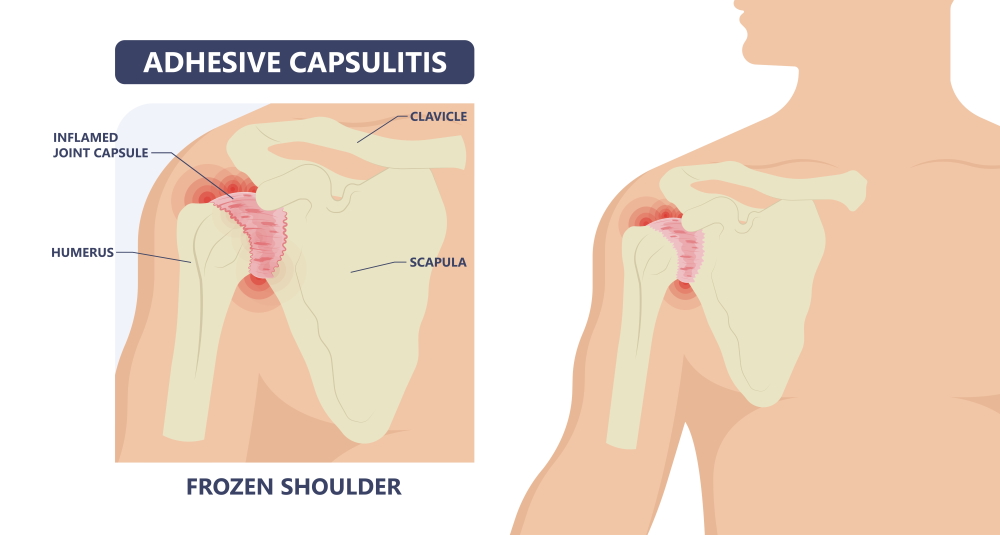
People with adhesive capsulitis report pain across the whole shoulder and restricted movement. Simple tasks become extremely painful. Reaching overhead, undoing a bra strap, or putting on a belt are common examples. Night pain is typical and often disrupts sleep.
The restriction comes from the rigid capsule, not weak muscles. You cannot move the shoulder fully — and neither can anyone else who tries.
Most cases improve without treatment. But spontaneous recovery can take years. We recommend early treatment rather than waiting it out.
How do we diagnose it?
See a doctor to confirm the diagnosis. A frozen shoulder restricts movement in all planes, which sets it apart from other conditions. We also use X-rays, ultrasound, or MRI to exclude other causes, such as arthritis.
Early diagnosis matters. A recent study found better outcomes when treatment starts in the early stages. Catch it early, and you may stop it from worsening.
What treatments help a frozen shoulder?
In the early stages, exercise helps improve range of motion. A therapist can teach you which exercises to do and which movements to avoid. Hands-on joint manipulation also helps.
Anti-inflammatory tablets and pain relievers, such as ibuprofen and codeine, reduce pain and let you continue your exercises. When pain is severe, a frozen shoulder cortisone injection is the next step. You can read about all the injection options on our frozen shoulder injection page.
What is a frozen shoulder hydrodilatation injection?
A frozen shoulder cortisone injection helps most in the early or “freezing” stage. It reduces pain and slows progression. Evidence shows an injection can relieve pain for up to 4 months. Dr Masci performs every injection under ultrasound guidance to maximise accuracy.
Hydrodilatation takes this further. The injection combines cortisone with a high volume of fluid. The fluid builds pressure inside the joint and stretches the capsule. This produces a faster “thawing” of the frozen shoulder.
Timing matters too. A study on injections in frozen shoulder compared early and late treatment. Patients injected at stage 1 recovered within 2–6 weeks. Patients at stage 2 took 7–12 weeks. Early assessment and injection produce a better result.
What does the injection contain?
A hydrodilatation injection for frozen shoulder contains three ingredients: sterile water (around 15–25 mL), local anaesthetic (around 5 mL), and cortisone (1 mL). The local anaesthetic improves comfort during the procedure. The cortisone reduces inflammation. The fluid volume stretches the capsule.
Is hydrodilatation better than a simple cortisone injection?
We think so. Earlier high-level studies showed little difference between the two. However, a recent study found hydrodilatation improves pain and range of motion more than a simple cortisone injection.
Both injections contain cortisone. The difference is volume. Hydrodilatation uses extra fluid to stretch the capsule while the cortisone settles the inflammation.
Does the volume of fluid matter?
Yes, potentially. We can inject a moderate volume (20–40 mL) or a high volume (over 40 mL). High volumes often rupture the joint capsule. One study found that stretching the capsule relieves pain and restores function better than rupturing it.
For this reason, Dr Masci uses a controlled, moderate volume. The aim is to stretch the capsule, not rupture it.
What happens on the day?
Dr Masci offers frozen shoulder hydrodistension injections as a one-stop visit at our London clinics. He takes a history and examines your shoulder. He then scans the joint with ultrasound to confirm adhesive capsulitis and rule out other causes. Finally, he performs the injection under ultrasound guidance in the same appointment. The visit takes around 30 minutes.
Expect some soreness for 24–48 hours afterwards. Take the rest of the day off work. Avoid driving — use a taxi or public transport instead. We then combine the injection with a physiotherapy programme to restore movement as the shoulder thaws.
How much does a frozen shoulder hydrodistension injection cost?
Our Chelsea clinic offers the most cost-effective option for self-paying patients. A consultation with diagnostic ultrasound and injeciton is £400. Our other clinics charge more. See our one-stop injection page for full pricing and our clinic locations here.
All major private insurers cover this injection. Our admin team can help you arrange pre-authorisation.
Frequently asked questions about frozen shoulder hydrodistension injections
Is a hydrodilatation the same as a frozen shoulder cortisone injection?
Both contain cortisone. A hydrodilatation adds a high volume of fluid to stretch the capsule. A simple cortisone injection reduces inflammation only.
Can you have a hydrodilatation without cortisone?
Yes, you can. However, we find the injection works better with cortisone. A small additional dose is safe from around 4 weeks after a previous cortisone injection.
What if the first injection helps pain but not movement?
This is common. Pain often improves before movement returns. For persistent stiffness or pain, we generally recommend a repeat injection at around 6 weeks.
Does fluid sometimes leak out after the injection?
Yes, this can happen. Fluid can escape the joint if the capsule ruptures during the procedure. It usually causes no harm.
Does hydrodilatation help shoulder bursitis?
Generally not. Bursitis responds better to a subacromial injection. Accurate diagnosis with ultrasound ensures you get the right injection for your problem.
How many hydrodilatation injections will I need?
Many patients improve after one injection. Some need a second, typically around 6 weeks later, for ongoing pain or restriction.
Final word from Sport Doctor London
Frozen shoulder is common in middle-aged people, and most cases have no clear trigger. Frozen shoulder hydrodilatation injections work well to relieve pain and stop the disease from progressing. Early treatment gets the best results. If you suspect adhesive capsulitis, book an assessment with a doctor experienced in ultrasound-guided injections.
To book a one-stop hydrodilatation appointment in London, contact us here or call +44 (0) 203 488 0350.
hi there, can this also be useful to treat shoulder bursitis
generally not – subacromial injection better for bursitis
Hello – I had a cortisone injection 3 weeks ago and it hasn’t worked. I’m looking at paying privately to have a hydrodilatation injection. Can the hydrodilatation injection be given without the steroid in it? I understand you cannot have a steroid based injection for 12 weeks from the 1st injection. If this can be given without the steroid part of it, is it just as affected or should I wait for 12 weeks?
Hi Sam, Yes you can, but I think the injeciton is more effective with cortisone. There is no harm in giving a little more cortisone 4 weeks after an initial dose.
what does the hydrolatation injection contain besides cortisone? Just water, or more active ingredients?
Hydrodistension contains sterile water, local anesthetic, and cortisone. Approx volumes: water 15-25 MLS, local anaesthetic 5mls, cortisone 1ml.
Had this done today immediately after procedure there was a fair amount of fluid came out is this normal
yes, it can be normal for fluid to escape the joint if the capsule ruptures.
Hello Dr Masci,
After 6 month of severe pain and sleepless nights, I had an hydrodistension a month ago and feel very much relieved. The pain is almost gone. Nevertheless, my range of movement has barely improved. Would you recommend repeating the procedure as soon as possible? Many thanks
Hi Neur,
I’d generally recommend a repeat injection at about 6 weeks for persistent pain and/or restriction.
LM
Dr. Marci – about a month ago my dog jerked my arm so severely I thought it would come out of my shoulder. Pain was pretty bad and I could hardly lift my arm. Went to a shoulder specialist and had X-rays. Nothing showed up and he thought it might be a tear in my tendon. He gave me a cortisone shot and suggested physical therapy. Pain went away immediately. Didn’t start therapy because I kinda felt like movement like therapy may injure it more. I was going to wait a couple weeks, give it a chance to heal some, then look into therapy. It’s been three weeks, and I have started feeling pain again. Any comments?
Thanks, Elaine Jones
I’d suggest you speak to your consultant again. I suggest you engage in physical therapy but you should speak to your consultant first.
Good afternoon,
I am in agony with what the Doctor thinks is Frozen shoulder, I have very limited movement of my arm due to pain. Therefore could I still have the hydrodilation injection?
Many thanks
Sarah
Hi Many thanks for your query.
Yes if you have frozen shoulder, you would benefit from a hydrodistension as outlined in the blog. And also outlined here:
https://sportdoctorlondon.com/frozen-shoulder-injection/
Regards
LM