

Quadriceps muscle tears occur frequently among runners and other athletes. They cause thigh pain and reduced function, often stopping people from enjoying sport. So what is a quadriceps tear, and how do we manage it?
A quadriceps tear is a strain of the thigh muscle, distinct from quadriceps tendonitis (overuse of the tendon) and a quadriceps tendon tear (rupture of the tendon).
What is the quadriceps muscle?
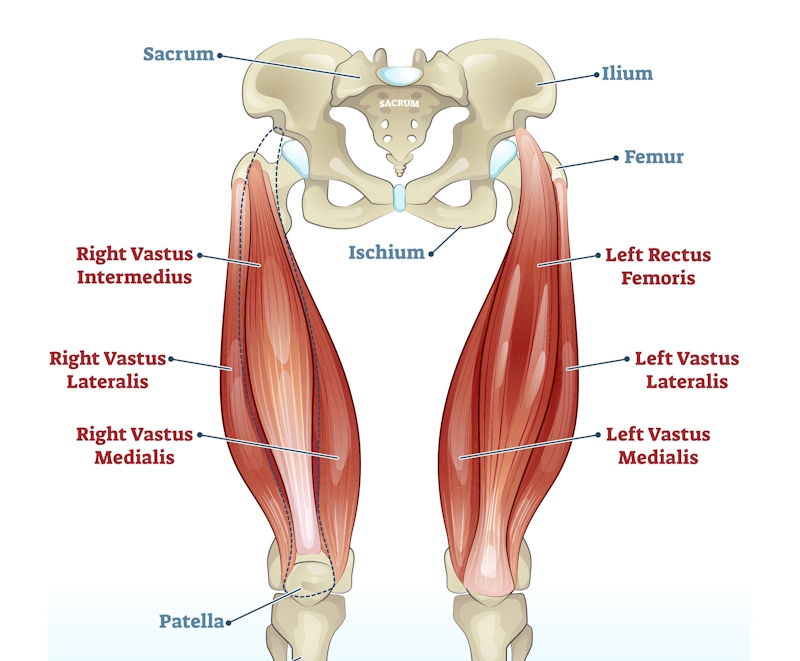
The quadriceps sit at the front of the thigh. It has four parts, with the rectus femoris in the middle. The muscle runs from the hip down to the kneecap and shin. It bends the hip and straightens the knee — so we use it to run, jump, and kick.
What does a quadriceps tear feel like?
Quadriceps tears are common in rugby and football, which demand high explosive force. The rectus femoris part is the most frequently injured. People usually report sudden pain when sprinting, changing direction, jumping, or kicking, and often know they’ve pulled the quad and find it hard to continue. There’s sometimes significant swelling or bruising afterwards.
How to manage a quadriceps muscle tear
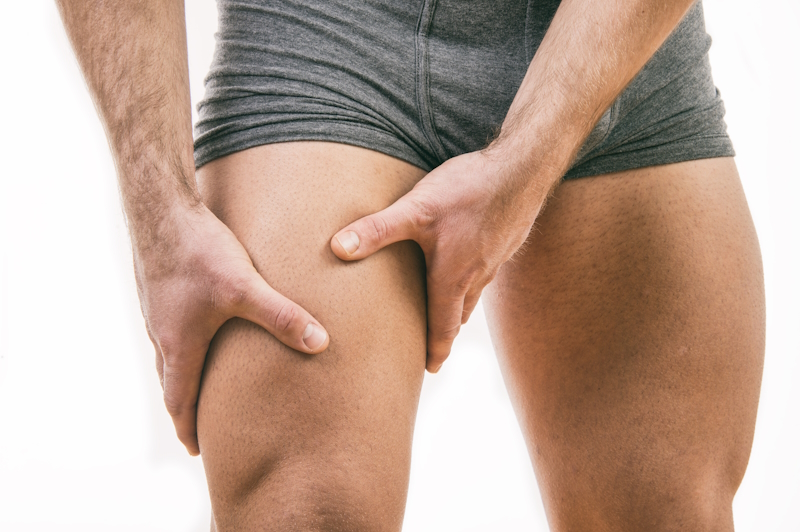
On examination, your doctor may find swelling or bruising in the lower quad, and contracting or pressing the muscle is painful. In severe cases, the muscle fully tears, leaving a bulge or defect.
Do you need investigations for a quadriceps tear?
Although a quadriceps tear can often be diagnosed from the history, we frequently use ultrasound or MRI to assess the severity. Imaging also rules out other causes of quad pain — a femoral stress fracture, myositis ossificans, a dead leg, and tumours.
Recent studies show the location of the tear determines how long it takes to heal. Quadriceps strains occur at the muscle surface (myofascial), the muscle belly, or the large central tendon within the muscle. Surface injuries recover quickly (3–4 weeks). Injury to the intramuscular central tendon has the worst prognosis, with a longer return-to-sport time (3–4 months).
Treating a quadriceps muscle tear
Recovery follows a simple but comprehensive rehab programme.
First, reduce swelling and bleeding. The RICE principles (rest, ice, compression, elevation) help stem the bleeding and should be continued for 2–3 days. Resting from sport is critical, and in severe cases, crutches are needed. Ice for 10 minutes every few hours, with a compression bandage.
Next, get the muscle moving — usually at 3–5 days, longer if the tear is severe. Gentle stretching and mobility work (bending and straightening the knee) improve length. Then strengthen, progressing from isometric holds to isotonic exercises such as squats, lunges, step-ups, and leg presses. Maintain fitness with swimming and cycling. Exercise shouldn’t worsen pain during or after.
Finally, once strength returns, progress gradually into sport-specific training — sprints, change of direction, and controlled kicking.
Frequently asked questions about a quadriceps tear
How long does a pulled quad take to heal?
It depends on severity and, crucially, location. Tears at the muscle surface heal fastest (around 3–4 weeks); those involving the large central tendon take longest (up to 3–4 months).
Can I run with a strained quad?
Not in the initial recovery phase. Make sure your quad strength has returned to normal first. Swimming or cycling keeps you fit while you rebuild strength.
Is ibuprofen helpful for a pulled quadriceps muscle?
Generally no. Ibuprofen may help control swelling in the first few days, but taking it longer can interfere with the natural healing process in the later stages.
Do injections speed up the recovery of a quadriceps muscle tear?
As a rule, no. Cortisone may slow healing and isn’t advised. PRP is used in some slow-healing cases, but the evidence suggests it’s generally unhelpful for muscle tears.
When is surgery needed for a quadriceps tear?
Rarely. We consider it in high-level athletes who fully rupture the large intramuscular (central) tendon. Surgery to repair it needs 4–6 months of recovery.
How is a quadriceps muscle tear different from a tendon tear?
A quadriceps muscle tear is a strain of the thigh muscle belly, typically seen in runners and other athletes. A quadriceps tendon tear is a rupture of the tendon just above the kneecap, and it is more common in older adults and far more likely to require surgery.
What else causes thigh pain?
Not all thigh pain is a quad tear. Other causes include a femoral shaft stress fracture, thigh nerve trapping, a dead leg, and referred pain from the hip or lower back.
Final word from Sport Doctor London about quadriceps tears
Quadriceps muscle tears are common in sportspeople who perform explosive activities such as rugby and football. The location of the tear is the most important factor in healing time. If you have a quadriceps muscle tear, see a doctor experienced in treating muscle injuries.
To book a thigh-injury assessment with Dr Masci in London, contact the team here or call +44 (0) 203 488 0350.
Leave A Comment