

Shoulder pain is common among active individuals. Common causes of shoulder pain include rotator cuff tendinitis, frozen shoulder, and shoulder joint arthritis. Doctors have recently used PRP, or platelet-rich plasma, to inject growth factors to help heal tendons, ligaments and joints. So, can we use PRP injections for shoulder pain, and which shoulder conditions respond best?
What is PRP?
PRP or platelet-rich plasma is simply a higher concentration of platelets than contained in blood. We obtain PRP by spinning blood in a centrifuge. The heavier red and white cells move to the bottom, while the plasma containing smaller platelet cells moves to the top. Then, we separate the plasma from the red and white cells and inject the plasma into our target joint, ligament or tendon.
PRP works by releasing growth factors from the platelets, leading to tendon or joint pathology healing.

Evidence for PRP injection shoulder
PRP has shown variable evidence for treating shoulder pathology – some pathologies are treated more effectively by PRP than others.
PRP shoulder impingement
Rotator cuff tendonitis, or shoulder impingement, is the most common cause of shoulder pain. Generally, this condition is slow to resolve and can take months to settle. Treatment options include physiotherapy, oral NSAIDs such as ibuprofen and cortisone injections. PRP injections have increasingly been used to treat rotator cuff tendonitis, primarily if other treatments have been used or are contraindicated. For example, repeated cortisone injections can weaken tendon structure and encourage the progression of tendon pathology from tendonitis to full tears.
A recent review on PRP in rotator cuff tendonitis found that PRP reduced pain better than other injections (such as cortisone) in the medium (6 months) and long term (12 months). Also, a few shoulder function tests were improved in the medium to long term. The study also found that PRP had few adverse effects (such as short-term pain increase), but these effects were transient.
PRP rotator cuff tears
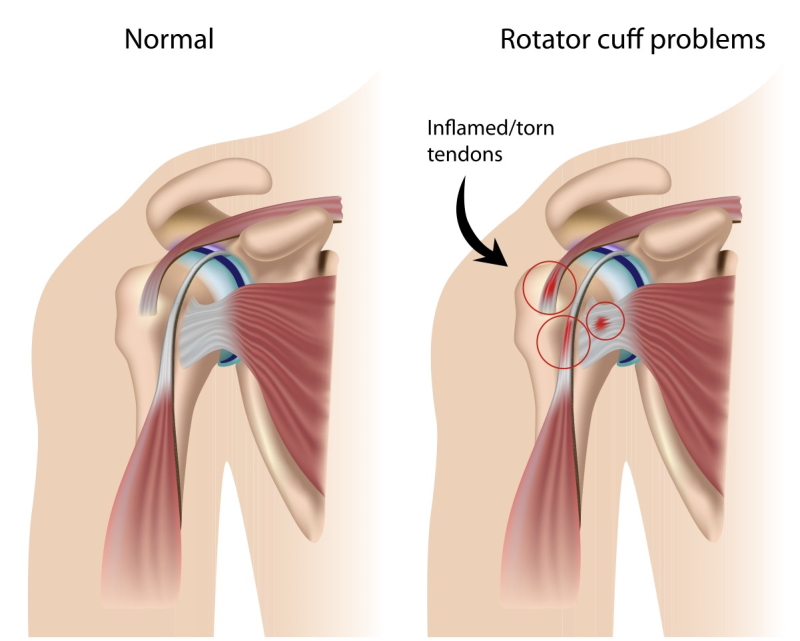
Rotator cuff tears can be partial or full thickness. Generally, we avoid cortisone injections in partial or full-thickness rotator cuff tears because we think cortisone can weaken and possibly extend the tear.
A recent review found that PRP injections for partial tears were better than other injectables (such as placebo or cortisone) at 12 and 24 weeks. However, PRP has not shown effectiveness in large full-thickness tears.
Frozen shoulder PRP
Frozen shoulder or adhesive capsulitis leads to pain and restriction in the shoulder. It is common in middle-aged people. Generally, we know that a cortisone injection is effective in the early stages of a frozen shoulder. Moreover, hydrodistension with a higher volume is the most effective.
However, recent studies have shown improved pain and function after PRP injections in frozen shoulder. One study compared PRP to cortisone in treating frozen shoulder and found a better effect of PRP on pain at 12 weeks.
While PRP is not the preferred treatment for frozen shoulder, it can be used for cases where cortisone or a hydrodistension is not recommended, contraindicated, or previously used.
PRP for shoulder arthritis
There have been no studies comparing PRP to other injectables in shoulder arthritis. Therefore, we cannot recommend PRP for shoulder arthritis at this time.
Generally, for shoulder arthritis, we recommend a high-molecular-weight hyaluronic acid injection such as Durolane. Sometimes, we combine Durolane with another injection, such as a suprascapular nerve block.
Preparation for PRP injection shoulder: what should you do?

We suggest the following simple instructions before your procedure to optimise the PRP effect:
- Hydrate well on the morning of the procedure. We suggest consuming 1.5L of fluid a few hours before your injection appointment.
- Avoid NSAIDs or Aspirin at least ten days before the procedure. These medications affect the function of platelets and will reduce the body’s natural healing response. Speak to your doctor if you are taking Aspirin for blood-thinning or heart causes.
- Reduce or stop caffeine intake for 24-48 hours before the injection.
- Inform your doctor about any medications or supplements, as some may need to be temporarily discontinued.
Recovery after platelet-rich plasma injection shoulder
After the PRP injection, you should follow a strict post-injection protocol to optimise the natural healing effect of PRP. These post-injection guidelines include:
- After the PRP injection, you should rest the injected area for a specified period, depending on the location and the treated condition.
- Pain management. You could experience short-term pain after a joint or tendon injection. Generally, joint injection soreness lasts a few days, while a tendon injection lasts up to 7 days longer. Pain-relieving techniques include regular ice 15 mins every 4 hours to the injected area to reduce swelling. Also, over-the-counter or prescriptive analgesia (examples include paracetamol, Co-Codamol, and Co-Dydramol) may be needed for the first 24-48 hours after an injection.
- Avoid NSAIDs such as ibuprofen or Aspirin for at least two weeks after a PRP injection.
How long should I rest after a PRP injection for the shoulder?
For shoulder injections, we suggest the following protocol:
Days 0-2: Completely rest your shoulder.
Days 3-7: Resume running and cycling.
Days 8-14: Return to 50% of your previous upper body weighted exercise.
Day 14 onwards: Return to full upper-body activity.
We suggest delaying the return to full activity until two weeks for injections into partial rotator cuff tears.
Other frequently asked questions about plasma injections for shoulder
Can PRP injection heal a torn rotator cuff?
Yes, but only partial thickness rotator cuff tears. For partial tears (or tiny full-thickness tears), PRP has been shown to improve pain after 6 and 12 months compared to other injectables such as cortisone. However, for large, full-thickness tears, PRP is not adequate.
How many PRP injections are needed for the shoulder?
Generally, we recommend one PRP injection with the possibility of a second injection at 6-12 weeks, depending on the response.
Final word from Sportdoctorlondon regarding plasma injections in the shoulder
PRP or plasma injections are effective for rotator cuff tendonitis, partial thickness tears, and frozen shoulder. Studies suggest that PRP has better long-term effects than cortisone and other injectables. Generally, PRP injections are an option in these pathologies when cortisone has been used or is contraindicated. However, non-injection management with exercise therapy should be your first treatment option.
Related topics:
- PRP therapy: most frequently asked questions
- PRP recovery time: what should you do before and after PRP injections to improve outcomes
- Platelet-rich plasma injections for knee arthritis
- PRP injections for arthritis and tendonitis
- Platelet-rich plasma injections for tennis elbow
- PRP for tendonitis: what is the best PRP formula?
- Steroid injections for the shoulder
- Subscapularis tendon tear
Leave A Comment