

Gout is a common disease, primarily affecting middle-aged men. Traditionally, gout presents as a painful and swollen big toe. However, gout can also affect other joints, including the knee joint. How do you know you have knee gout, and what can you do about it?
What is gout?
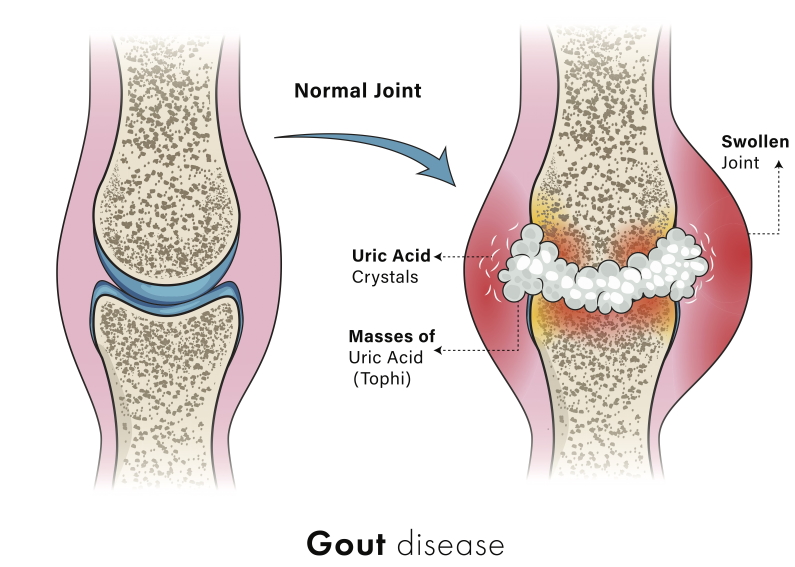
Excess uric acid in the blood leads to Gout. We produce uric acid from certain foods containing purines, such as heavy meats, seafood, and alcohol. High levels of uric acid deposit into joints, causing rubbing and leading to inflammation, swelling, and pain. Generally, the big toe is affected, but other joints, such as the ankle and knee joints, are also affected.
Gout occurs in men in their 40s and 50s, although younger people and women can also get Gout. It affects about 1-2 people in every 100, meaning over a million people in the USA have Gout.
Common Gout Symptoms in Knee
Ususally, Gout in the knee will be hot, inflamed, and swollen. It often occurs suddenly without apparent cause and worsens over hours. Gout can resemble an acute infection, so seeing a physician is essential to diagnosing it correctly. Also, uric acid might attack the tendons at the front of the knee, such as the patellar or quadriceps tendons, rather than the joint.
Sometimes, Gout may not present with acute swelling. Instead, you might have a swollen knee and mild discomfort without severe redness or heat. It can be challenging to distinguish ‘sub-clinical’ Gout from other causes of a swollen knee, such as osteoarthritis or rheumatoid arthritis.
How do we Diagnose Gout in the knee?
Your doctor will ask questions about your symptoms and examine your knee. Blood tests (rheumatoid panel) to assess uric acid levels and blood inflammation will also help. However, be aware that uric acid levels in the blood might be normal or low in acute gout attacks (as all the uric acid goes into the joint). Additionally, ultrasound or MRI can determine whether the swelling is due to Gout or another cause. Finally, we can obtain fluid from the knee joint (knee joint aspiration) for laboratory testing. If we see typical uric acid crystals, we can confirm the diagnosis.
Other possible causes of a painful, swollen knee:
Septic arthritis
Septic arthritis is due to an infection in the knee. This condition is often mistaken for gout. Generally, people with an infection are unwell, with fever; however, gout can also cause fever. If there is suspicion of septic arthritis, consulting a physician at your local hospital is essential.
Pseudogout
Pseudogout, or CPPD, is an acute arthritis caused by calcium crystals depositing in the joint. It is more common in older adults and primarily affects the knee joint. It resembles Gout, with a hot, swollen knee, although the onset is more gradual than in acute Gout.
Inflammatory arthritis
Other causes of inflammatory arthritis include rheumatoid or psoriatic arthritis. These types of inflammatory arthritis generally have a slower onset than acute knee gout.
Causes of Gout in Knee
Generally, higher blood uric acid levels are associated with a greater risk of acute Gout. Essential factors that increase uric acid levels include:
- Family history – high uric acid levels are often genetic
- gender – males are at higher risk
- Diet – Certain foods high in purine increase uric acid. Examples include red meat, prawns, broad beans, cakes, and pastries.
- Alcohol
- Certain medications, such as diuretics
- Weight gain
A gout attack is often triggered by an event such as a high intake of purine-rich foods or alcohol intake. Additionally, an acute injury, such as twisting your knee, can trigger an attack.
Knee Gout Treatment
In general, simple measures can be taken to prevent knee gout. Examples include ice, knee compression, and rest from the sport. Also, you need to stay well-hydrated and avoid alcohol.
Medications from your doctor can help. For example, anti-inflammatory drugs such as ibuprofen can rapidly relieve acute pain and prevent further gout attacks. Similarly, Colchicine can prevent Gout if taken in the first 24 hours. The colchicine dose is often one tablet three times a day, decreasing to twice a day after a week as the pain settles.
Can you take Colchicine with ibuprofen?
Yes, both medications treat acute Gout and have different actions. However, we favour Colchicine for acute attacks because it is well tolerated and effective. On the other hand, ibuprofen or NSAIDs can cause side effects such as stomach ulcers, high blood pressure, or kidney problems.
Ultrasound-guided cortisone injections: is it beneficial for knee gout?
Cortisone is a potent anti-inflammatory steroid drug that works almost immediately to stop acute Gout. It can be taken by mouth, but side effects are common. A cortisone injection into the knee joint is effective. Using ultrasound to guide a needle into the joint is essential to improve accuracy and impact. If the knee is swollen, drain it before the cortisone shot.
Generally, a cortisone shot for knee gout takes a few days to start working. However, if given early in an acute attack, it can stop it in its tracks.
What about PRP injections for immediate relief of knee gout pain?
PRP injections for Gout are only reserved for exceptional cases. Like cortisone injections, PRP injections are anti-inflammatory and are expected to have a beneficial effect. This effect is probably better if the injected knee joint also has osteoarthritis. Nevertheless, the impact of PRP is less than that of cortisone. Overall, we would consider PRP injection for Gout only if the risks of corticosteroid injection are too high.
Gout Knee Recovery Time
Most acute knee gout attacks resolve within a few days with appropriate management. However, if left untreated, symptoms may take weeks to resolve, and low-grade swelling may persist.
Moreover, recurrent gout attacks are expected. More than 60% of people who suffer a gout attack develop a recurrence within two years—even more reason to prevent ongoing attacks with simple treatments.
Tips on Prevention of Gout
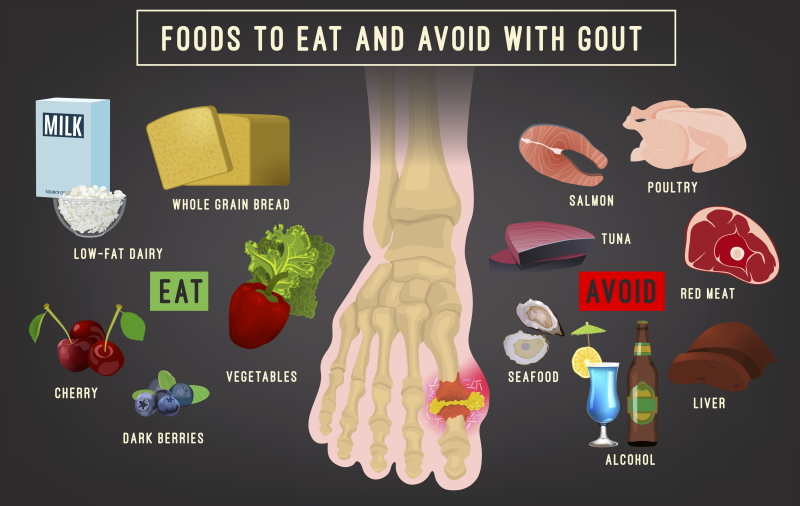
Firstly, you need to treat lifestyle factors. Examples include losing weight, reducing alcohol intake, and eating a healthy diet.
Secondly, your physician may prescribe medications to lower uric acid levels. The most common drug is Allopurinol. Waiting until an acute attack has settled before starting this drug is essential. Consult your physician about whether you should consider this drug. In general, preventative medication such as Alluprinol is helpful if uric acid levels are high (above a level of 500) and you’re experiencing recurrent attacks. It would be advisable to increase the Allopurinol dose every 1-2 months until your uric acid level is 350 or below.
A lifestyle change can typically reduce uric acid levels. Foods that increase purine levels and should be avoided include organ meats, sardines, anchovies, prawns, beans, and foods containing high concentrations of high-fructose corn syrup. In addition, yeast and yeast-based foods, such as frozen and canned products, can cause adverse effects. Also, sugar-sweetened beverages and alcoholic drinks increase acid levels. Generally, wine is better than hard liquor or beer.
On the contrary, foods that reduce uric acid include cherries, fruit and vegetables, low-fat dairy products, and a vegetarian diet. A high-protein diet and intake of dairy products have not been associated with increased gout attacks. Additionally, staying well hydrated can prevent and treat an attack.
Other frequently asked questions about gout knee:
How long does gout in the knee last?
Most cases of knee gout are acute and short-lived. If left untreated, most cases settle after a few weeks. However, recurrent attacks are common, with the risk of another attack approaching 60% within one year.
Can you get gout in a knee replacement?
Yes, although gout is relatively rare after knee replacements. Generally, gout in a knee replacement is difficult to differentiate from acute knee joint infection or septic arthritis. Finding uric acid crystals in the knee fluid is the key to diagnosing gout in a knee replacement. Also, a history of recurrent gout attacks increases the possibility of gout in a knee replacement.
Can you get gout in your hip?
Yes, but hip gout is extremely rare. Sometimes, hip gout can be misdiagnosed as avascular necrosis of the femoral head. Additionally, hip gout does not typically present with the usual features of gout in other joints, such as swelling, redness, or increased skin temperature. One clue is that the hip ultrasound may show a typical double contour line characteristic of gout. Also, removing fluid from the hip to analyse for uric acid crystals will help.
Is gout associated with other health conditions?
Recent studies suggest that gout is associated with an increased risk of anxiety, depression and heart attacks.
If you have gout, should you stop protein powder supplements?
No. However, vegetable-based or whey proteins are generally better.
Final word from Sportdoctorlondon on Gout in Knee
You must think about gout for acute knee pain and swelling without trauma. Early treatment with medication will quickly alleviate symptoms. You should see a sports medicine doctor for the correct diagnosis and treatment plan.
Had a cortisone on Thursday 14:09/23. Yesterday (Monday 18/09/23) was the first time I think it had any impact. I am suffering with gout and it has flared up after chemotherapy and non-chemotherapy treatments from the cancer unit