
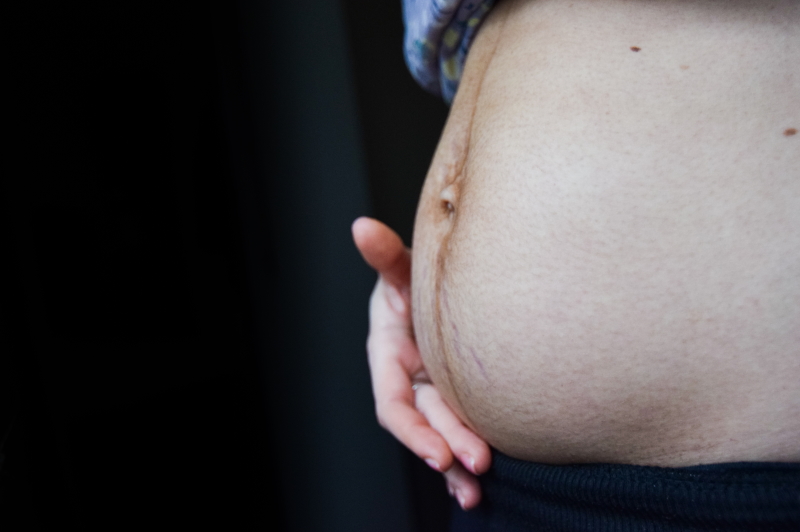
Diastasis recti is the abnormal separation of the rectus (“six-pack”) muscles of the abdominal wall. We often call this process abdominal separation or coning. It’s best known in women after childbirth, but men and athletes get it too — and it’s often missed in them. In men, it typically follows heavy lifting, straining, or weight gain rather than pregnancy. So what is diastasis recti in men, and is surgery the only answer for abdominal separation?

What causes diastasis recti in men?
The overriding cause is raised pressure inside the abdomen, which stretches the linea alba — the connective tissue running between the two rectus muscles — until they separate. In men, the common drivers are:
- Heavy resistance training — repeated heavy lifting and straining (especially with poor breathing or bracing technique) raises abdominal pressure
- Sudden weight gain or a large amount of visceral (deep abdominal) fat
- Repeated straining — chronic cough, constipation, or heavy manual work
- Connective tissue laxity — genetic conditions that make the tissues more stretchy
For completeness: in women, the separation usually develops in pregnancy, as the growing baby stretches the abdominal wall and hormones such as oestrogen and relaxin soften the tissues. About a third of women still have abdominal doming a year after birth. But the focus of this page is the male and athletic presentation.
Symptoms of diastasis recti in men
The hallmark is a visible bulge or ridge down the middle of the tummy, between the rectus muscles — often called abdominal coning or abdominal doming. It’s typically worse when standing or when you tense the abdominals (such as sitting up), and it flattens when lying down.
Because the abdominal wall is weaker, diastasis recti can also lead to:
- Difficulty lifting objects
- Abdominal discomfort
- Pelvic pain
- In some cases, urinary symptoms
How is diastasis recti diagnosed?
Your doctor first takes a history of any previous abdominal surgery, heavy lifting or straining, and bowel or bladder symptoms. The doming is usually visible, but an examination confirms it, and the separation can sit above or below the navel.
Imaging is helpful. A CT scan was traditionally used to confirm and grade the separation, but ultrasound now gives excellent information without radiation or high cost. The gap is measured at several points above and below the belly button: a separation greater than 3 cm is abnormal, and greater than 5 cm is severe. Imaging also shows whether there’s an actual hole in the wall (a hernia), and whether the muscles are contracting properly, which helps predict whether exercises will work.

Treatment of diastasis recti in men
We generally treat a smaller separation — less than 5 cm — with rehabilitation, and reserve surgery for a separation greater than 5 cm or where rehab has failed.
Rehab uses targeted exercises to reduce the separation, plus education about which exercises to avoid. It takes about four weeks to start working and up to 12 weeks for the full effect.
Exercises to avoid
Avoid exercises that bulge the abdomen outwards or sharply raise abdominal pressure — sit-ups, crunches, abdominal twists, backward bends, and yoga poses that overstretch the abdominals. Building the deep core first is the priority before progressing to more advanced work.
Best exercises for abdominal coning in men
The most useful exercises tense the deep abdominal muscles with a neutral spine — drawing the belly button gently towards the floor while keeping the back flat — and are held longer and progressed gradually. Planks, push-ups, and pelvic-floor work are then added. Some therapists also use neuromuscular electrical stimulation; research shows that muscle stimulation combined with exercise beats exercise alone.
Do you need surgery for abdominal doming?
Surgery is considered when the gap is greater than 5 cm or when rehab hasn’t improved the separation. It can be done open or via a keyhole approach, using stitches to bring the muscles back together; any hernia is repaired at the same time. Most people return to work in 2–4 weeks and avoid heavy lifting for at least four weeks.
Frequently asked questions about diastasis recti in men
Can men get diastasis recti from lifting weights?
Yes. Repeated heavy lifting and straining — particularly with poor bracing or breath-holding — raises abdominal pressure and can stretch the linea alba over time. It’s one of the commonest causes in men and male athletes, alongside weight gain.
Can diastasis recti in men be fixed without surgery?
Often, yes — a separation under 5 cm usually responds to targeted deep-core rehab, with results typically seen in about 4–12 weeks. Surgery is reserved for larger gaps (over 5 cm) or when rehab hasn’t worked.
What’s the difference between abdominal doming and a hernia?
Doming (coning) is the bulge of abdominal contents through a stretched but intact linea alba. A hernia is a true hole in the abdominal wall through which tissue protrudes. They can coexist, and imaging helps distinguish them — which matters because a hernia may require surgical repair.
Which exercises should I avoid with diastasis recti?
Avoid moves that make the abdomen cone outwards — sit-ups, crunches, twists, backward bends, and deep abdominal-stretching yoga poses — until the deep core is stronger. A simple check is to watch for the midline bulging during an exercise; if it cones, modify or stop it.
Could my abdominal lump or pain be something other than diastasis recti?
Possibly. Other causes include small ventral, umbilical, or interparietal hernias and trapped abdominal-wall nerves (ACNES). If you’re planning a paraumbilical or epigastric hernia repair, repairing any diastasis at the same time improves the result.
Who should I see about a diastasis recti repair?
Diastasis repairs were traditionally performed by plastic surgeons using a mesh, but hernia and plastic surgeons often now work together to achieve the best results. Ask your doctor about a combined surgical team — we suggest the team at OneWelbeck London.
Final word from Sport Doctor London about diastasis recti in men
Diastasis recti is common after childbirth, but men and athletes get it too — usually from heavy lifting, straining, or weight gain. Surgery isn’t the whole answer: where the gap between the rectus muscles is under 5 cm, targeted rehab should be tried first.
If you have abdominal doming or coning, Dr Masci can assess you in London, including an ultrasound in the clinic, and guide treatment. Contact the team here or call +44 (0) 203 488 0350.
Is surgery for large (greater than 5cm) diastasis recti a covered procedure in Great Britain?
Also, I’ve had several Doctors and physical therapists say to avoid planks and push-ups and one therapist recommend planking for strengthen abdominal muscles. Is there are certain point of separation were either exercise is healthy to do or not healthy to do?
hi Lisa, I suspect you mean in the NHS – yes some trusts fund a repair.
I think exercise is a good option irrespective of the degree of separation. However, larger gaps often don’t respond as well.
Hi there, I initially had a 5cm gap at 6 months PP with my first. Was referred to physio at my local hospital and cleared once the gap was around 3/2cm.
My second I was told I had a 3cm gap, this time 6 weeks PP, however my protruding belly button made the GP think maybe I had a hernia. A ultrasound at 9 months PP proved this to not be the case, but also that by initial 3cm gap my actually be 4cm.
With the knowledge gained from the hospital physio from my first born, and the help of a PP personal trainer this time round I am doing all I can, but still very much look pregnant with a protruding stomach, belly button and what feels like little progress. For reference I am not a big lady at all in size.
I’m a little lost at what I do next, or where do I seek professional help, and is so, who and what?
Any guidance would be appreciated. Thank you.
Generally, we don’t recommend surgery unless gas is over 5.5cm, BUT there are always exceptions to the rule. I’d speak to a plastic surgeon who specialises in diastasis repairs. Al the best.