

CrossFit is a high-intensity programme of functional exercises — running, gymnastics, weights, rowing, and plyometrics. So it’s no surprise that the wrist takes a considerable beating during CrossFit. So what causes CrossFit wrist pain, and what should you do about it?
Causes of CrossFit wrist pain
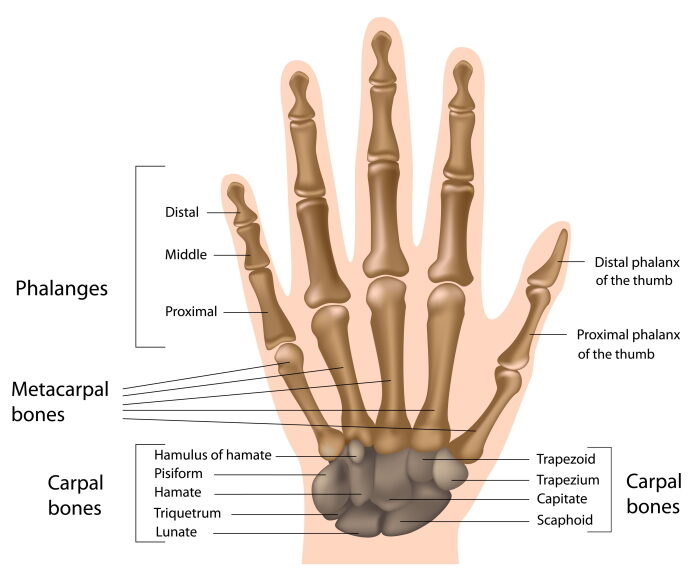
The wrist joint (the radiocarpal joint) connects the forearm to the hand. Overloading it can cause problems in the wrist bones, joints, and tendons. Common causes of CrossFit wrist pain include the following.
Wrist impingement
Overloading the wrist with excessive push-ups and burpees can cause swelling of the wrist joint and capsule, leading to pain and swelling at the front of the wrist. Treatment usually means modifying CrossFit activity, plus ibuprofen and ice. Occasionally, a cortisone injection into the wrist joint and capsule helps.
Scapholunate ganglion
A ganglion is a cyst arising from the scapholunate ligament or joint degeneration. It causes pain and swelling at the top of the wrist after activity, and sometimes a visible lump. Treatment usually means exercise modification, wrist strapping, and cyst aspiration.
TFCC tear
The TFCC (wrist cartilage) connects the two forearm bones. Damage can follow a fall or excessive wrist bending, presenting as pain on the little-finger side of the wrist during high-load activities such as burpees and push-ups. Treatment usually means anti-inflammatory measures and hand therapy; occasionally, we consider a cortisone injection or keyhole surgery, depending on the tear.
Kienböck’s disease
Too much load on the wrist can cause bone swelling — in this case, in the lunate, a bone in the middle of the wrist. The lunate is more prone to breakdown because its blood supply is more tenuous than that of other wrist bones. This condition can be serious: if left unchecked, the breakdown can lead to a crack in the bone and collapse of the wrist joint.
People with Kienböck’s disease usually have low-level pain at the top of the wrist. As it progresses, the pain worsens, with swelling and restricted movement, and CrossFit activities such as burpees and push-ups tend to hurt. Early detection is key — we use X-ray and MRI to detect lunate swelling, and if caught early, complete rest can settle the swelling and prevent further breakdown.
How is CrossFit wrist pain diagnosed?
Given the wrist’s complexity, it’s important to see an expert. A careful assessment identifies the source of the pain, and imaging often confirms the diagnosis and guides treatment. We usually start with an X-ray, then add ultrasound and/or MRI if the X-ray is normal.
How to keep training while your CrossFit wrist pain settles
According to Matt Curley, senior strength and conditioning coach at Amp, most people can keep training with simple changes to exercise selection:
- Press-ups on a racked barbell, rather than the floor, can be less painful.
- When bench pressing, keep the wrists locked in a neutral position rather than loaded in extension.
- Using a safety bar for squats avoids extreme wrist positions and is gentler on the wrists.
While Olympic lifts, kipping pull-ups, and muscle-ups are out, focus on rebalancing the shoulder muscles — stretching the chest and strengthening the back of the shoulder with face pulls or rows — while the wrist heals.
Wrist pain location diagram
Click the site of your wrist pain to identify possible causes, then click a condition to learn more.

Volar radial wrist pain
- Base of thumb arthritis
- De Quervain's tenosynovitis
- STT joint arthritis
- Wrist joint arthritis
- Scaphoid fracture
- Scaphoid Stress Fracture
- Flexor Carpi Radialis Tendonitis
- Anterior Interosseous Syndrome
Dorsal radial wrist pain
Dorsal ulnar wrist pain
Volar ulnar wrist pain
- Flexor carpi ulnaris tendonitis
- Wrist arthritis
- Hook of hamate fracture
- Hamate Stress Fracture
- Guyon's canal syndrome
Volar hand pain
- Trigger finger
- Carpal tunnel syndrome
- Dupuytren's contracture
Finger pain
- Finger joint arthritis
- Trigger finger
- A2 Pulley injury (Climber's finger)
- Flexor digit tendonitis
Thumb pain
Dorsal Forearm Pain
Frequently asked questions about CrossFit wrist injury
What causes wrist pain in CrossFit?
The common causes are wrist impingement (from push-ups and burpees), a scapholunate ganglion, a TFCC (cartilage) tear, and — less commonly but more seriously — Kienböck’s disease. Which one it is depends on where the pain sits and how it behaves, so an assessment matters.
Can I keep doing CrossFit with wrist pain?
Often yes, with modifications — pressing on a racked barbell, keeping the wrists neutral when bench pressing, and using a safety bar for squats all reduce wrist load. Kipping pull-ups, muscle-ups, and Olympic lifts are best paused while they settle.
Do wrist wraps help with CrossFit wrist pain?
Wrist wraps or strapping can support the joint and reduce pain during lifting, and are a reasonable short-term aid alongside load modification. They don’t treat the underlying cause, though, so persistent pain still needs to be assessed.
When is a CrossFit wrist injury serious?
Persistent top-of-wrist pain that worsens, with swelling and restricted movement, can signal Kienböck’s disease, which needs early diagnosis and rest to prevent the lunate from breaking down. Any wrist pain that isn’t settling deserves an X-ray and, if needed, an MRI.
Final word from Sport Doctor London about CrossFit wrist injury
CrossFit wrist pain has several possible causes. We recommend an early diagnosis by an expert in CrossFit injuries — occasionally, a more serious condition, such as Kienböck’s disease, requires immediate rest and treatment.
If you have CrossFit wrist pain, Dr Masci can assess you in London, including an ultrasound in the clinic. Contact the team here or call +44 (0) 203 488 0350.
Leave A Comment