
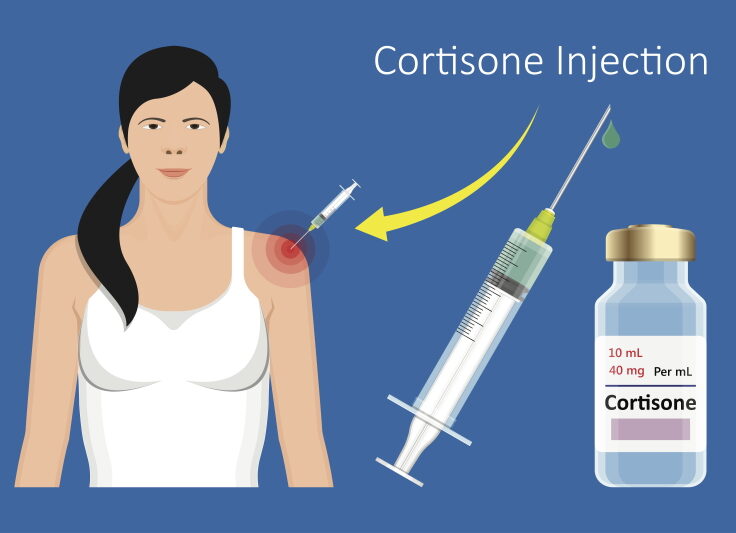
More than 500,000 cortisone injections are performed for musculoskeletal conditions such as arthritis and tendonitis. Although cortisone effectively reduces inflammation in these conditions, it is often stigmatised. So, are cortisone injections bad for you?
What is cortisone?
Cortisone is a potent anti-inflammatory drug. It has been used to reduce inflammation in musculoskeletal and immune conditions, such as rheumatoid arthritis. Moreover, cortisone has numerous other effects, some of which haven’t been clearly defined. So, it’s a drug that needs to be respected.
Your body makes corticosteroids naturally through the adrenal glands on top of your kidneys. Cortisone is a synthetic corticosteroid that mimics the effects of the natural hormone, including reducing inflammation and maintaining blood pressure and sugar levels.
It is important to note that cortisone is not the same as anabolic steroids, which build muscle but do not reduce inflammation.
Pros
Generally, tendonitis and arthritis involve inflammation of the affected area. To reduce inflammation, we can take medication by mouth (such as cortisone or ibuprofen tablets). However, taking medication by mouth distributes a small amount throughout the body and may increase side effects.
On the other hand, a cortisone injection delivers the drug directly to the sites of inflammation, resulting in reduced systemic absorption.
In general, we recommend a cortisone injection for more inflammatory conditions, such as trigger finger and De Quervain’s tenosynovitis.
However, inflammation plays a lesser role in conditions such as tendonitis, with degeneration being a more critical factor. As such, cortisone injections are less effective. Examples include tennis elbow, Achilles tendonitis, and patellar tendonitis. Cortisone injections may worsen the pain in some tendons, such as tennis elbow, at three months. Therefore, we should use corticosteroids less frequently for tendonitis.
Similarly, in conditions such as knee osteoarthritis, the results of a cortisone injection are suboptimal. Recent studies suggest that cortisone injections for knee arthritis can relieve mild pain, which typically lasts only about three months. However, there is some concern that repeated cortisone injections may accelerate arthritis.
Cons
Cortisone injections administer a high concentration into an area with a low concentration in the body. Thus, we are concerned that this high concentration can have nasty side effects. These side effects are for both tendons and joints.
For example, recent studies have shown that repeated cortisone injections into joints can cause cartilage damage to become more severe. One study found that you had twice the chance of suffering from cartilage damage after a cortisone injection compared to other drugs. This damage may not be a concern for older patients, as the damage has already occurred. However, in younger patients, cartilage softening is less favourable.
For tendons, we know that cortisone reduces the mechanical strength of diseased tendons, particularly in the first few weeks after injection. To mitigate this risk, we recommend that you rest the injected tendon from activities such as running for 10-14 days. You should ask your doctor about activity after a cortisone injection into your tendon.
Additionally, other side effects of cortisone should be avoided. For example, cortisone injected near the skin can lead to skin thinning, fat loss, and reduced pigmentation. Overall, we should exercise caution when injecting cortisone near the skin. Other potential side effects from cortisone include increased sugar levels, a cortisone flare lasting 3-5 days after injection, an increased risk of infection, and facial flushing.
Are cortisone injections bad for you? Other cortisone myths debunked:
You can only have three cortisone injections in a lifetime
Generally, if the first injection is ineffective, subsequent injections are likely to be useless as well. Moreover, you should limit the number of injections to 2-3 per area over 3-6 months. However, the rule that one may have only three in a lifetime is invalid. Injections can be administered into various parts of the body.
Cortisone injections will weaken my bones and make me fat
As discussed above, the amount of cortisone that moves throughout your body after an injection is minimal. Cortisone is usually cleared from your body after one to two weeks. We don’t think you should be overly concerned about weak bones or weight gain.
Why am I having a cortisone injection if it’s just a painkiller?
Cortisone helps with pain, but it also reduces inflammation and treats the problem rather than just masking it. The key is to use cortisone safely only for particular conditions.
Does a cortisone injection weaken the immune system?
Cortisone is a potent anti-inflammatory. However, it also suppresses the immune system. Studies suggest that this effect only lasts for a few weeks. There is no evidence that a single or two cortisone injections have long-term effects on the immune system.
Is there an alternative to cortisone injections?

Yes. Given concerns about cortisone, we seek to use alternatives for specific conditions.
Hyaluronic acid
Hyaluronic acid is a naturally occurring substance in joints, bones, and tendons. We use it for arthritis and some cases of tendonitis. Recent evidence suggests that hyaluronic acid reduces pain longer than cortisone, with fewer adverse effects.
Hyaluronic acid is separated by molecular weight into high- and low-molecular-weight fractions. In general, we believe that high-molecular-weight hyaluronic acid, such as Durolane, is more potent and has a longer duration of action. For example, one study showed that Durolane—a high-molecular-weight hyaluronic acid—remains effective for up to 15 months after a single injection. Additionally, repeated injections showed the same improvement across up to 5 injections.
However, like any injection, there is a small risk of side effects such as joint pain and swelling. Generally, about 10-20% of injections lead to a small amount of pain and swelling.
PRP
Platelet-rich plasma (PRP) is used in some instances of tendinitis and arthritis. Platelet-rich plasma comes from whole blood. We spin the blood in a centrifuge to separate the cells from the plasma. This plasma contains a high concentration of platelets, which have growth factors. We inject this plasma into joints and tendons to improve healing and reduce inflammation.
Recent studies suggest that PRP effectively reduces pain in knee arthritis, plantar fasciitis, tennis elbow, greater trochanteric pain syndrome, and rotator cuff pain. Second-generation PRP, which contains a higher platelet concentration and dose, is thought to be more effective. An example of a second-generation PRP is Arthrex ACP Max.
Combined PRP and hyaluronic acid
Perhaps combining the two is preferable to either alone. Indeed, recent evidence suggests that combined PRP and hyaluronic acid are superior to PRP alone in knee arthritis. This positive effect occurs at 3, 6, and 12 months.
Arthrosamid injeciton for knee arthritis
Arthrosamid is a unique hydrogel of water molecules attached to a polyacrylamide backbone. It is injectable and non-degradable, meaning the body does not break it down. It works by coating the synovial lining of the knee joint, reducing inflammation and providing lubrication.
Recent studies show improvements in pain scores that last for up to 5 years. In addition, compared with hyaluronic acid, it is more effective in younger, slimmer patients and in those with more extensive knee joint swelling. However, it is more expensive than other injectables, such as corticosteroids, PRP, or hyaluronic acid.
Final word from Sportdoctorlondon: Why Cortisone Shots are Bad for You
So, are cortisone injections bad for you? In general, we think that cortisone injections can still be used safely for some conditions. However, we use cortisone less frequently for many diseases and substitute it with other injections, such as hyaluronic acid and PRP. It would be best to ask your doctor about these options to find the best one. Finally, you should consult a physician experienced in ultrasound-guided injections.
Dr Masci is an expert in ultrasound and ultrasound-guided injections, including cortisone, hyaluronic acid, PRP, and Arthrosamid.
Related topics:
- Platelet-rich plasma for arthritis and tendonitis
- Hyaluronic acid injections
- Arthrosamid for knee arthritis
- Combining PRP and hyaluronic acid for knee arthritis
- How long does it take for a cortisone shot to work? FAQ
- How long does a steroid shot last?
- Do you need to rest after a cortisone injection?
- Do cortisone shots cause weight gain?
- Cortisone and diabetes: what should you do?
- Can you have a cortisone shot while pregnant?
- Cost of cortisone injections
I have RA and for 2 years now living with extreme headaches, neck pain , tingling in the tongue, painful teeth, throbbing mouth, extreme pain in my cheeks and they go red and puffy . I’ve had several injections of cortisone in the base the head /neck , the first injections worked and now they’re not nearly as effective , I’ve had 6-8 injections . I’m lost I can’t stand the pain anymore. Would a natural healing dr have effect ?
I’d avoid more cortisone injections. Botox is an option if you’re headaches are tension-related. Speak to your doctor.
Hi two years ago I was given Ciprofloxacin and it caused dry painful knees (MRI showed degenerative meniscus ) in addition to Achilles tendinosis which healed and tennis elbows which are still healing. My physiatrist wants to give me cortisone shots for the degenerative meniscus but I am very afraid tat it will weaken surrounding tendons and cartilage further
I’ve been managing with natural anti inflammatory supplements avoiding both NSAIDS & cortisone shots and doing mild physical therapy until a rent FLARE of inflammation and pain
I am average weight non smoker and no alcoholic beverages
My physiatrist said some people can get a bad reaction to HA injections – should I continue to avoid cortisone shots and NSAIDS after taking Ciprofloxacin 2 years ago which harmed my tendons and cartilage and prob bones. At the time of the Cipro injury I was given steroids IV at the same time which made matters worse for me
Thank you !! I believe PRP is not covered by insurance in the states and doctor said there’s a risk I can get a bad reaction to HA injections
Thank you 🙏
Generally, I recommend avoiding repeated cortisone injections for joints and tendons. NSAIDs are fine if you don’t use them continuously and you don’t have major issues with your heart or kidneys.
Hyaluronic acid injections are a reasonable option for arthritis. Yes, reactions can occur but are not common, especially with imaging such as ultrasound. Please see my blog on Durolane. LM
I’d reach for all natural 100 % tumiric cucumrin & essential oils !!!!!!!!!!! no more shots …………….