

Recovering from an injury can be frustrating, particularly for athletes and active individuals who want to maintain fitness while allowing their bodies to heal. An innovative rehabilitation tools available today is the anti-gravity treadmill, also known as Alter G training. This specialised equipment enables users to run or walk with reduced weight-bearing stress. Initially developed by NASA for astronauts, this technology has revolutionised injury recovery, particularly for stress fractures and tendon injuries. In this blog, we’ll explain how the Alter G training machine works and how it can help athletes rehabilitate injuries while maintaining fitness.
What is an Anti Gravity Treadmill?
An anti-gravity treadmill uses air pressure technology to reduce body weight load on the lower limbs while allowing the user to walk or run. The most well-known version is the Alter G training.
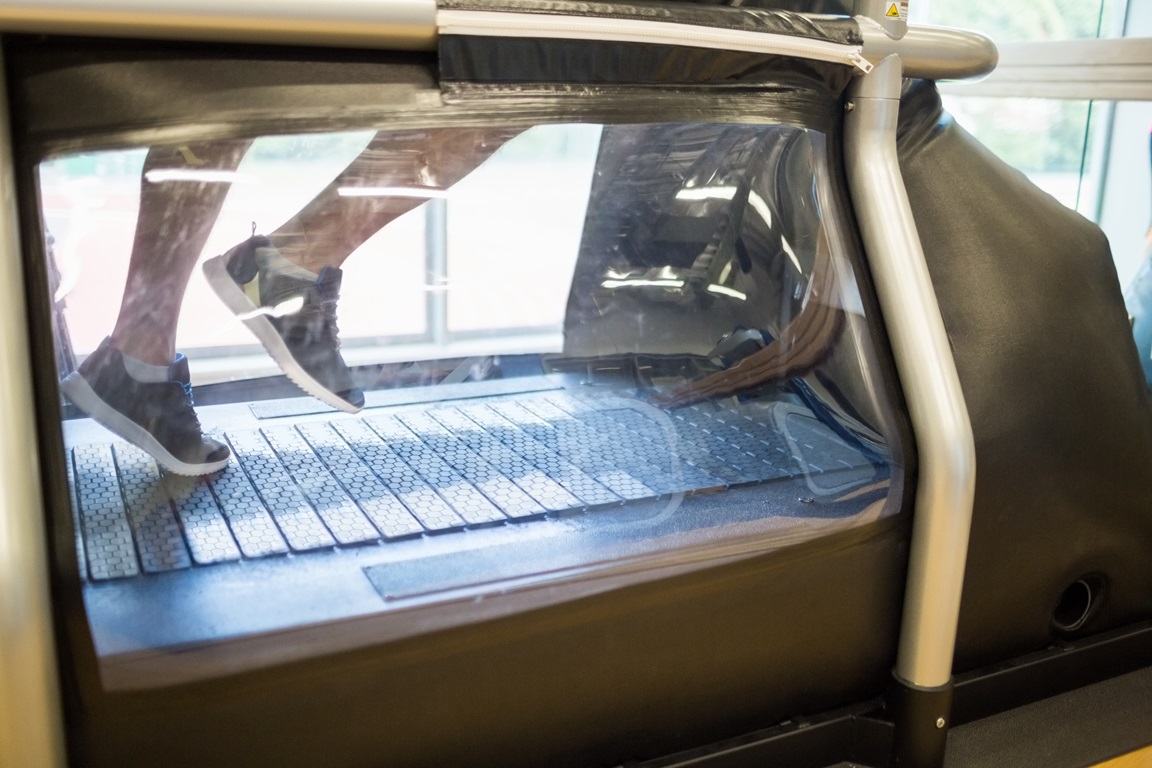
The machine consists of a standard treadmill enclosed in a pressurised air chamber. The user wears a compression garment that zips into the chamber, creating an airtight seal around the lower body. Once secured, the treadmill can reduce body weight by up to 80%, allowing for low-impact movement.
How Does an Anti Gravity Treadmill Work?
The anti-gravity treadmills operate based on differential air pressure (DAP) technology. By adjusting the air pressure within the chamber, the machine can reduce the impact force on the lower legs and pelvis.
Here’s how the process works:
- The user wears tight-fitting shorts, which zip into the air chamber.
- The chamber is inflated with air, creating a gentle lifting force.
- The treadmill is set to the desired body weight percentage, ranging from 20-100%.
- The user can walk or run in a controlled, low-impact manner.
Benefits of Using an Anti-Gravity Treadmill
The anti-gravity treadmill offers several key advantages for individuals recovering from lower limb injuries, including stress fractures. These benefits include:
- Reduced Load on Joints and Bones – By decreasing weight-bearing forces, the treadmill allows pain-free movement in conditions such as arthritis and stress fractures.
- Earlier Return to Impact Activity– Athletes recovering from stress fractures can begin running earlier without risking re-injury.
- Maintained Fitness – Unlike complete rest, the anti-gravity treadmill enables injured athletes to maintain fitness while recovering from injury.
- Gradual Progression of Weight-Bearing – The ability to adjust weight-bearing allows a smooth transition from non-weight-bearing to full activity, preventing setbacks.
- Psychological Benefits – Injured athletes often struggle with the mental impact of complete rest. The ability to run earlier can improve confidence and reduce mental health issues.
What conditions will benefit from an Anti-Gravity Treadmill?
The following conditions can benefit from an anti-gravity treadmill:
- Stress fractures of the shin, ankle, foot and pelvis
- Lower limb tendonitis, such as Achilles tendonitis, patellar tendonitis and plantar fasciitis
- Hip, knee and ankle arthritis
- Post-surgery recovery such as Achilles tendon repair, joint replacements and ACL surgery.
Using the Anti-Gravity Treadmill for Stress Fractures
Stress fractures are a common injury in runners and team sports. These injuries occur due to bone overload, leading to minor cracks in the bone.
A key challenge in stress fracture recovery is maintaining fitness while allowing the bone to heal. The anti-gravity treadmill is ideal for this problem, as it enables controlled weight-bearing and gradual loading of the affected bone. Other stress fracture treatments can also be used, such as vitamin D and calcium supplements, focussed shockwave and LIPUS therapy.
The rehabilitation process for a stress fracture using an anti-gravity treadmill typically follows these stages:
- Acute Phase (Weeks 1-4) – No Running
-
- Athletes focus on rest, cross-training (e.g., swimming or cycling), and bone healing.
- No running is performed on the treadmill at this stage.
- Early Return to Running (Weeks 4-6) – Reduced Load Running
-
- Running begins at 50-60% body weight, with a short duration and slow pace.
- Running volume gradually increases based on pain levels and bone healing progress.
- Progressive Weight-Bearing (Weeks 6-10) – Gradual Loading
-
- Treadmill settings are progressively increased to 80-90% body weight.
- Regular running is introduced in a controlled setting.
- Full Return to Running (Weeks 10-12) – Transition to Normal Running
-
- The goal is to transition from treadmill running to regular ground running.
- Athletes follow a progressive return-to-sport protocol, gradually increasing intensity.
These timelines may differ depending on the stress fracture’s location and severity. For example, more problematic stress fractures in the navicular, base of the 5th metatarsal, and neck of the femur might need more rest time before transitioning to anti-gravity and weight-bearing running.
Other frequently asked questions about Alter G Training
How much does an anti-gravity treadmill cost?
The cost of an anti-gravity machine can vary from £40000 to 60000. However, some centres allow you to use the machine on a sessional basis for £20-40.
Does the anti-gravity treadmill change running gait?
Yes, we think so. Studies suggest that the step rate (cadence) decreases with an anti-gravity machine. This change needs to be considered when using the machine. We generally recommend athletes increase their running step count when using the machine.
Final Word from Sportdoctorlondon onto-Gravity Treadmill
The anti-gravity treadmill provides a controlled environment for athletes and active individuals to stay fit while recovering. For stress fractures, it allows for an early return to running, promoting bone healing while preventing fitness loss. If you are recovering from a stress fracture, speak to a sports medicine specialist about whether an anti-gravity treadmill program is right for you. Generally, we suggest your sessions are supervised by a physical therapist who safely makes changes to your running time and step count.
Related conditions:
Leave A Comment