
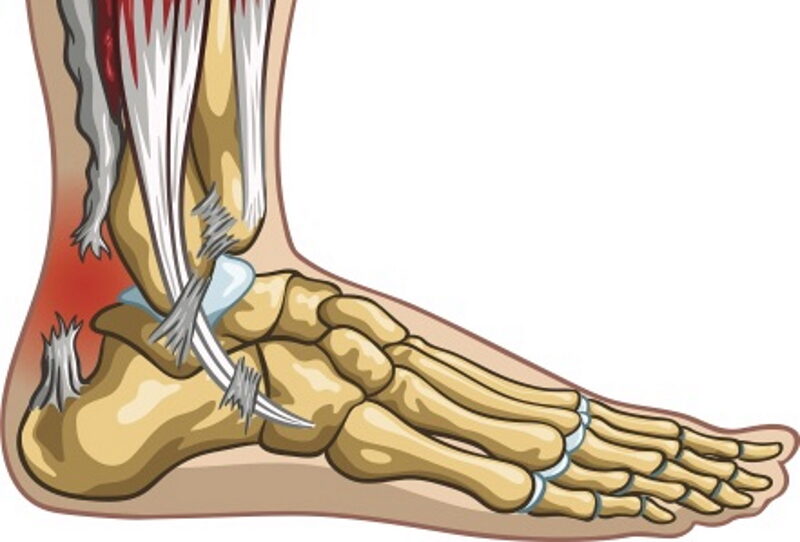
The Achilles tendon is the largest in the body, attaching the heel to the calf muscles. Because it bears huge forces, it’s prone to both swelling and rupture. Men aged 25–40 have the highest risk of rupturing their Achilles tendon. The big question after a rupture is whether you need surgery — and the answer has changed. Dr Masci answers the most common questions below.
What causes an Achilles tendon rupture?
Anyone can rupture their Achilles, but known risk factors include:
- Sex: men are about seven times more likely than women
- Age: highest between 25 and 40
- Underlying Achilles tendonitis: pain precedes only a third of ruptures, but over 95% show underlying collagen degeneration
- Recent cortisone injection: cortisone weakens tendon structure — a key reason we avoid it in the Achilles
- Fluoroquinolone antibiotics: this group raises rupture risk
- A previous rupture on the other side
What are the symptoms of an Achilles tendon rupture?
A rupture is usually sudden — pain at the back of the ankle during an explosive movement, such as a sprint start or a change of direction. People often hear a pop or snap and think they’ve been kicked in the calf. Swelling and bruising usually follow, though not always, and some people can still walk on a complete tear.
Signs a doctor checks for
- Loss of ankle tone: the foot rests less pointed than the other side — the most accurate sign
- The calf-squeeze (Thompson) test: Squeezing the calf doesn’t move the foot on the ruptured side (though an intact plantaris can mask this)
- A palpable gap in the tendon

The diagnosis is clinical, but ultrasound confirms a complete tear and measures the gap between the tendon ends, which guides treatment. A gap over 10 mm carries a 75% risk of re-rupture without surgery, and a gap over 5 mm worsens functional outcomes. So, a gap greater than 5 mm with the toes pointed down indicates surgical repair.
Surgery or no surgery for an Achilles tendon rupture?
This has genuinely changed. We once repaired all ruptures surgically; now we treat many successfully without surgery. Repair reduces the risk of re-rupture, but non-surgical patients achieve the same range of motion and return to sport when early rehab is followed, and surgery carries risks of infection and wound breakdown.
The ultrasound gap helps decide: a gap of 5 mm or more with the toes pointed down means a much higher re-rupture rate and worse outcomes without surgery. Both paths have trade-offs, so discuss them with an experienced doctor.

Recovery is similar with or without surgery, and early weight-bearing and exercise prevent calf wasting and tendon lengthening — two key reasons for incomplete recovery.
- Phase 1 (0–8 weeks): foot pointed in a boot with heel lift; non-weight-bearing on crutches initially, then weight-bearing from two weeks. Heel lifts are reduced every 2–3 weeks. Gentle isometric calf work for two weeks.
- Phase 2 (8–12 weeks): boot removed, walking retrained (highest re-rupture risk point); heel lifts kept for our more weeks; progressive seated and standing calf raises.
- Phase 3 (12–15 weeks): single-leg calf raises with added weight, plus hip and knee strengthening.
Returning to running takes at least 12 weeks and requires five single-leg calf raises matching the other side. Return to sport is 6–9 months out, needing 25–30 single-leg calf raises (or 85% of the uninjured side).
Frequently asked questions about Achilles tendon rupture
Can you walk on a ruptured Achilles tendon?
Yes — often with a limp. Other lower-leg muscles compensate, so being able to walk does not rule out a complete rupture. Get it assessed.
Should I avoid certain antibiotics?
Fluoroquinolones (e.g. ciprofloxacin, levofloxacin) cause tendon swelling and rupture. Take them only for serious infections, and stop immediately and tell your doctor if you develop tendon pain.
Does PRP help an Achilles rupture?
No good evidence supports it. A study found that PRP injected after Achilles tendon repair did not accelerate healing, so we don’t recommend PRP for ruptures.
Is a partial tear treated differently from a complete rupture?
The principles are similar, but partial tears rarely need surgery — typically heel raises or a boot for 4–6 weeks, then graded calf strengthening, with heel raises in shoes for about 12 weeks.
My Achilles tendon has lengthened after a rupture. What can I do?
Achilles lengthening slows rehab and weakens push-off. If a scan shows the tendon intact, wear heel raises, avoid stretching, and strengthen in the inner range first. The tendon often remodels and shortens over time; persistent lengthening occasionally requires surgery, which is considered only after a year of rehab.
Final word from Sport Doctor London about Achilles tendon rupture
Achilles tendon rupture is common in sport, and recent evidence shows that non-surgical management can match surgical outcomes — especially with early, structured rehab. The ultrasound gap and your circumstances guide the decision, so see an experienced doctor.
To book a one-stop Achilles assessment with Dr Masci in London, contact his team here or call +44 (0) 203 488 0350.
HI!
It is so promising that physiotherapy and sport medicine are working together in the same line.
It is good to see how you dose the phases of rehabilitation, just like I describe it from my experience.
I am a PT who torn the Achilles tendon six years ago and wrote a book to help patients who need to recover with an extra help.
Just if you want to take a look, my dear Dr Masci, this is the link:
https://www.fisiodue.com/achilles-tendon-rupture/
I do hope it is the beginning of a great relationship.
Warm regards!!!