
Hyaluronic acid injections are commonly used for knee arthritis. While different factors affect the effectiveness of these injections for knee arthritis, an essential element is post-injection aftercare. This blog outlines what you should do after knee gel injections to get the most out of your injection.
What is hyaluronic acid?

Hyaluronic acid, a gel injection, is a naturally occurring substance in the body. It forms part of the building blocks and nourishment for cartilage and bone. You can consume hyaluronic acid as a tablet or use it as a face cream, but we think it works better if injected into a joint.
While we are uncertain how a gel injection works, we have several hypotheses. One theory is that it acts as a lubricant, thereby allowing the joint to move more smoothly. Alternatively, a gel injection reduces joint inflammation, lowering knee pain and swelling.
Evidence for Gel Injections
The most common condition we treat with hyaluronic acid is knee arthritis. A recent study compared injection treatments for knee arthritis and found that gel injections were more effective than cortisone injections, oral Ibuprofen, and paracetamol. Moreover, high-molecular-weight hyaluronic acid was the most effective.
We also treat other conditions with hyaluronic acid, including:
Does the molecular weight of hyaluronic acid matter?
Generally, molecular weight refers to the mass of hyaluronic acid molecules. Viscosupplementation can be high- or low-molecular-weight. High-molecular-weight requires only one injection because it is more potent and lasts longer in the joint. Overall, we prefer to use a high-molecular-weight hyaluronic acid for knee arthritis.
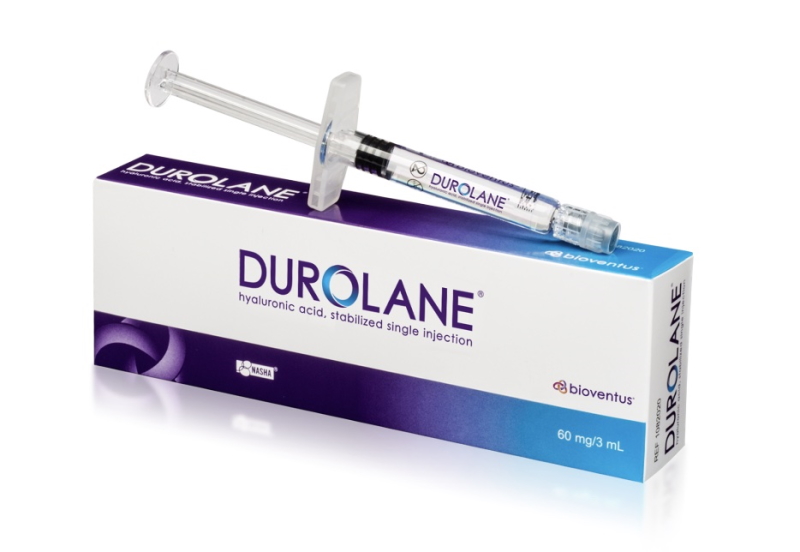
An example of a high-molecular-weight hyaluronic acid is Durolane.
Side Effects of a Knee Gel Injection
Generally, hyaluronic acid injections are incredibly safe. But, like all medications, these injections have potential side effects.
The most common side effects include:
- Mild flare consisting of discomfort and swelling. The flare usually starts after 24 hours and lasts up to 2 weeks. About 10-20% of patients will develop a mild, self-limiting flare.
- Allergic reaction. This is a rare side effect causing severe pain and swelling. The rate of allergic reaction is less than 1/100. We don’t know why some people are allergic to hyaluronic acid, but we think a reaction is more likely with less accurate landmark-guided injections. We also know gel injections made from chicken protein are more likely to cause a reaction. Generally, we treat allergic reactions with anti-inflammatory medications such as Ibuprofen. Some cases need drainage and a cortisone injection.
- Infection is infrequent, occurring in 1:10000 injections. However, you should consult a physician who uses clean injection techniques, such as sterile dressing packs and gloves.
What should I do after a Knee Gel injection: Immediate Aftercare
After receiving a knee gel injection, you should rest the knee for the remainder of the day. Practically, you should reduce your walking and use public transport or a private car that day.
Other essential aftercare instructions include the following:
- Ensure that the injection site remains clean. You should keep the bandage in place until the end of the day and wash the area to prevent bacteria from reaching the injection site.
- Avoid submerging the injected knee. You can shower the knee, but avoid hot tubs or swimming pools for 24 hours.
- Treat with anti-inflammatory measures to reduce the risk of a mild gel flare, even if you don’t have pain. We suggest applying ice to the injected area for 10-15 minutes every 2-3 hours, and starting oral Ibuprofen 400mg thrice daily for 24 hours. If you develop a flare, continue anti-inflammatory measures until the flare settles.
- You should avoid excessive exercise such as walking, running or cycling.
How Long Do You Need to Rest after Knee Gel Injections?
In general, we recommend resting the knee for 2 days. After two days, you can gradually increase your activity levels. However, if you still have a flare after two days, you should rest until it resolves. Continue treating the flare with anti-inflammatory tablets, such as Ibuprofen, and regular ice packs for 15 minutes every 4-6 hours until the flare resolves.
When should I return to running after a knee gel injection?
We recommend 7 days of rest from running after knee gel injections, although the duration of rest depends on the severity of knee arthritis. More severe arthritis may require longer rest, up to 10 days.
You can start cycling after four days.
When should I return to the gym after a knee gel injection?
We recommend that you refrain from the gym for two days. After two days, you may resume upper-body and abdominal exercises. You may resume lower-leg weight training after 1 week, at 50% of your pre-injection load. After 14 days, you may resume full lower-body weights.
Other Frequently Asked Questions about Hyaluronic Acid Injections:
When can I drive after knee gel injections?
We recommend avoiding driving immediately after a knee gel injection. However, you may drive the following day unless you develop a flare that restricts your ability to bend and straighten your knee.
Can I walk after a knee gel injection?
In general, we recommend resting your knee for a few days after a gel injection. After a week, if you don’t experience a flare-up, you can recommence regular walking for fitness.
Should I have a knee gel injection with ultrasound guidance?

Using ultrasound improves the accuracy and effectiveness of a knee gel injection.
A recent study showed that hyaluronic acid injections performed under ultrasound have a significantly greater effect than those performed without ultrasound. In a survey of over 1000 patients, ultrasound-guided hyaluronic acid injections were associated with a lower rate of knee replacement (over 30% lower) than blind injections.
Also, we think using ultrasound reduces the risk of an allergic reaction.
You should ensure your doctor uses an ultrasound to administer a knee gel injection.
How long do knee gel injections take to work?
Generally, a knee gel injection takes about four weeks to start working. However, patients sometimes notice an effect in 2 weeks or as late as six weeks.
How long does a knee gel injection last?
Generally, the effect of a hyaluronic acid injection lasts from 6 to 12 months. However, we hypothesise that higher-molecular-weight hyaluronic acids last longer. For example, in a recent study, a single Durolane injection for knee or hip arthritis lasted, on average, over 400 days. However, some people will have a more prolonged effect, whereas others will have a shorter one.
Can you have knee surgery after gel injections?
Yes. Having a gel injection before surgery does not increase the risk of infection. Conversely, if you have a cortisone injection, you should avoid surgery for six months.
Final word from Sportdoctorlondon about Hyaluronic Acid Injections Aftercare
Knee gel injections are an effective treatment for knee arthritis. Generally, we suggest resting the knee for two days before gradually returning to activity over 7-10 days.
Leave A Comment