
Platelet-rich plasma (PRP) injections for joints and tendons are increasingly popular. Part of the field of regenerative medicine, they’re used to reduce pain and promote healing. But is there evidence that a platelet-rich plasma injection works for arthritis and tendonitis?
This is the main PRP guide. For practical questions and cost, see our PRP therapy FAQ; for recovery, see PRP injection recovery time; for tendons specifically, see PRP for tendonitis.
What is platelet-rich plasma?

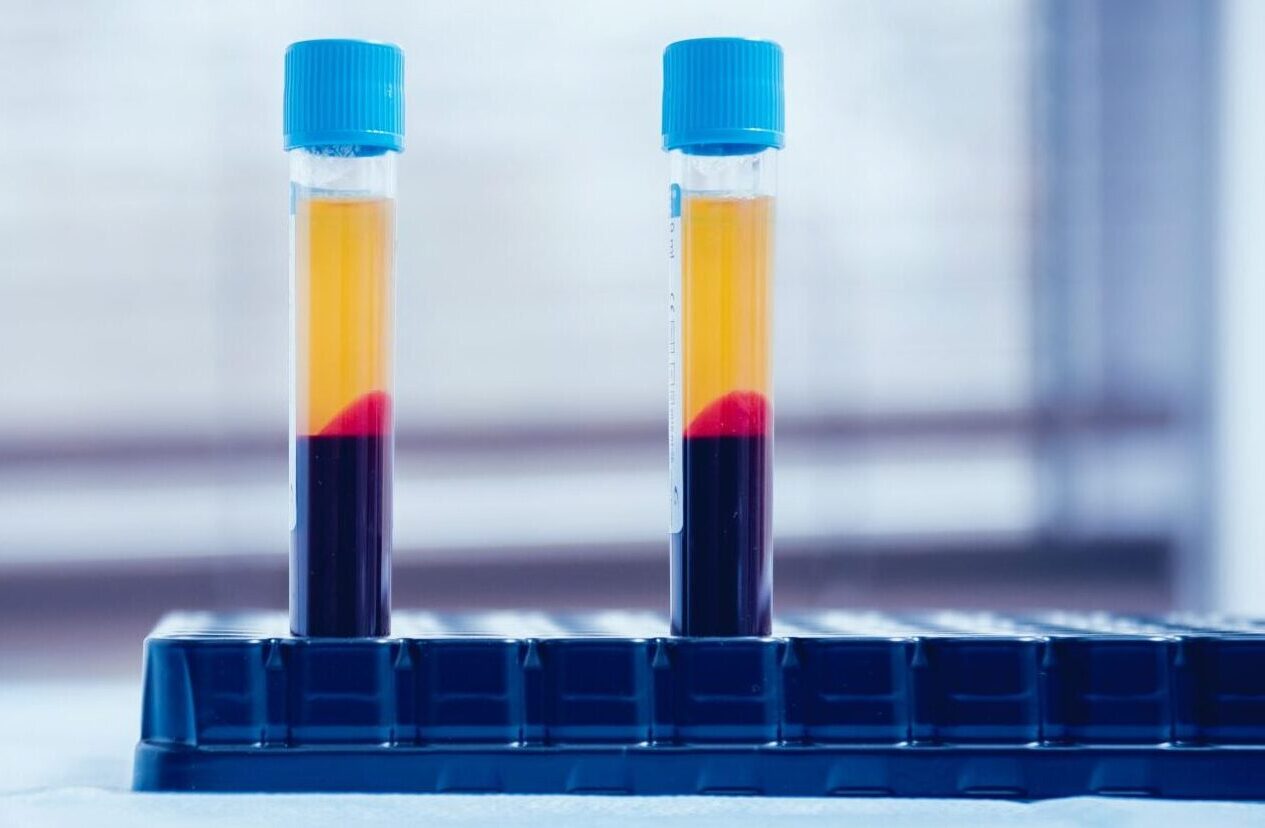
Platelet-rich plasma is a blood sample with a platelet concentration higher than that of whole blood. We take blood from a vein in the arm and spin it, separating it into red cells, white cells, and plasma. The platelet-rich plasma is drawn off and injected into the joint or tendon. We remove the red cells because they break down cartilage and stimulate unwanted inflammation.
Why aim for a higher platelet concentration?
Different PRP systems yield different concentrations — some above 1.5x whole blood, others above 5x. We don’t yet know the exact optimum, but recent evidence suggests that higher is generally better. One study suggested 10 billion platelets for optimal efficacy, but it is flawed. Until we have more data, we aim for a higher platelet concentration and dose, given in one or several injections.
Leucocyte-poor vs leucocyte-rich PRP
Some systems also raise the white-cell (leukocyte) count, needing more blood (50 mL) and repeated spins — N-stride PRP is one. Recent evidence suggests leucocyte-poor PRP is suitable for arthritis (fewer side effects, equally effective). In contrast, leucocyte-rich PRP suits tendonitis — for example, it’s more effective in hip tendonitis or greater trochanteric pain syndrome.
How do PRP injections reduce pain?
We don’t fully know. Platelets regulate clotting and carry high concentrations of growth factors that influence inflammation and healing. Injecting PRP into a joint or tendon releases these growth factors, improving the local environment — thereby lowering pain and speeding tissue healing. According to NICE, the UK body that assesses treatments, PRP reduces pain and may delay the need for a knee replacement.
Does PRP regenerate cartilage or tendon tissue?
No. There’s no evidence that PRP — or any injectable — regenerates tissue. Its pain-relieving effect comes from a better joint or tendon environment, not regeneration.
Is there evidence for PRP injections?
Yes, but only for a few specific conditions:
- Knee osteoarthritis — 23 randomised trials show PRP beats other injections (cortisone, hyaluronic acid) for pain, and outperforms hyaluronic acid.
- Tennis elbow — PRP beats cortisone in some studies, though a Cochrane review found it no better than other treatments.
- Plantar fasciitis — PRP beats cortisone in 9 studies, and is safer than surgery in severe cases.
- Hip tendonitis (greater trochanteric pain syndrome) — PRP beats cortisone, lasting up to two years.
- Rotator cuff tendonitis — PRP beats cortisone in the medium term.
PRP hasn’t shown benefit for other joints and tendons. Dr Masci published a paper summarising the evidence for PRP in tendonitis.
How many PRP injections do you need?
We don’t know the exact optimum. For knee osteoarthritis, we suggest 2–3 injections two weeks apart. For tendons, one to two injections two weeks apart. Second-generation systems deliver higher doses per injection — Arthrex ACP Max delivers 7–10 billion platelets in a single injection, compared with the usual 2–3.
Does a PRP injection hurt?
Generally not. We often numb the skin with local anaesthetic, and ultrasound guidance makes the injection less painful. A few people need painkillers afterwards — paracetamol or codeine, plus ice every 4–6 hours, especially after tendon injections.
Side effects of PRP injections
PRP is safe. You may have joint or tendon soreness for up to a week — leucocyte-rich PRP tends to provoke a stronger reaction. The positive effects don’t start for 2–3 weeks. The infection risk is lower than that of other injections, at around 1 in 1,500,000.
How long should you rest after PRP?
For arthritis, rest from running and sports for a week, then start non-impact activities (swimming, cycling) after a few days. For tendons, allow up to two weeks; avoid explosive activity, such as running, for two weeks after a weight-bearing tendon injection. Our recovery-time guide gives day-by-day protocols.
How long do PRP injections last?
It varies. For arthritis, 2–3 injections can last 12–18 months. The effect on tendons is more unpredictable.
Combining PRP and hyaluronic acid
Combining PRP with hyaluronic acid shows real promise — one study found a greater effect at 3 and 12 months, with fewer side effects than PRP alone.
Frequently asked questions about platelet-rich plasma injections
Is PRP safe?
Very. Because it’s your own blood, the risk of a serious reaction is minimal, and the infection risk is lower than with cortisone or hyaluronic acid.
How long does PRP take to work?
The positive effect starts at 2–3 weeks for joints and a little longer for tendons. Don’t judge it early — some soreness in the first weeks is normal.
Who should not have PRP?
Avoid PRP if you have a blood cancer (leukaemia, lymphoma), a low platelet count, are on chemotherapy, are pregnant, or have a joint infection. Our PRP therapy FAQ lists the full contraindications.
How much does PRP cost?
PRP in London ranges from about £350 to £1,000 per injection. Dr Masci offers standard PRP at £510 (first) and £410 (subsequent), and the single-injection Arthrex ACP Max at £1,350. See the PRP therapy FAQ for details.
Final word from Sport Doctor London about platelet-rich plasma injections
PRP injections help knee osteoarthritis, tennis elbow, plantar fasciitis, hip tendonitis, and shoulder tendonitis — but not other joints and tendons. PRP works best combined with an expert-led exercise programme.
To book a one-stop ultrasound-guided PRP injection in London, contact Dr Masci’s team here or call +44 (0) 203 488 0350.
I have RA, and happy to Hier there are safer injections . Thank you